Buy Buy Psychedelic Drugs. Psychedelics (also known as hallucinogens) are a class of psychoactive substances that produce changes in perception, mood, and cognitive processes.
1P-LSD stands for 1-propionyl-lysergic acid diethylamide. It’s a derivative of LSD — which essentially means it’s a modified version of the classic LSD-25 that Albert Hofmann discovered in 1943.
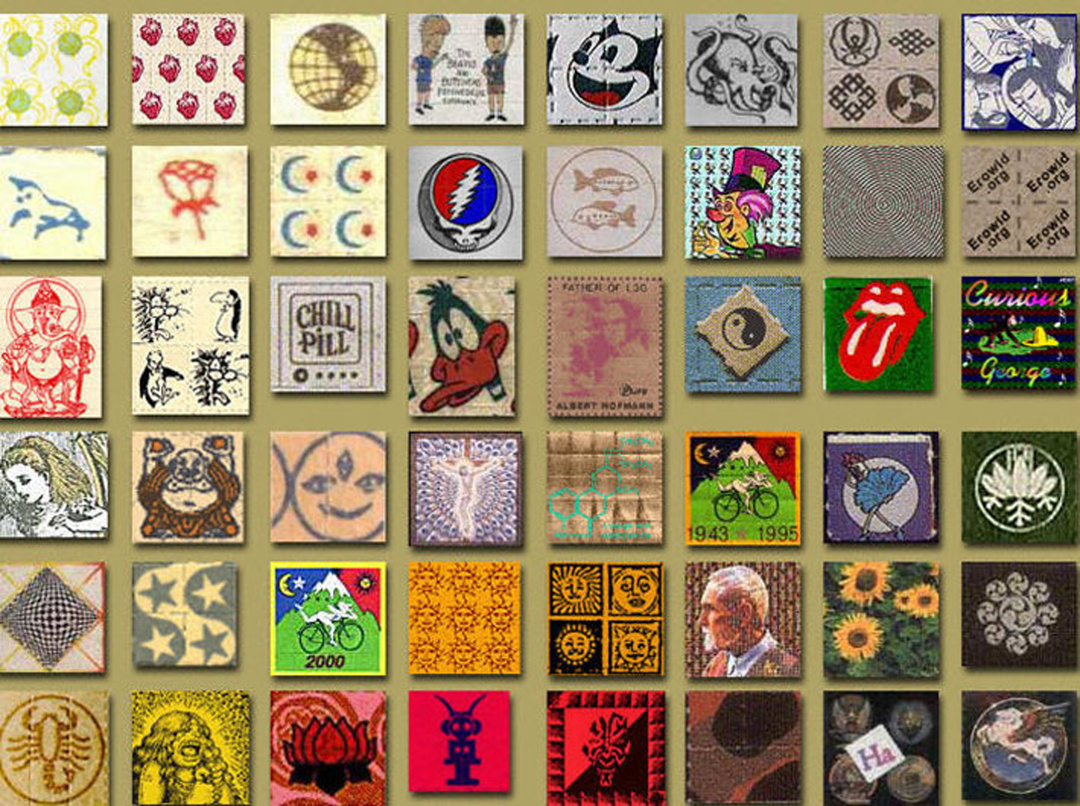
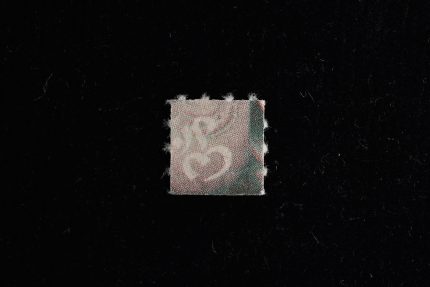
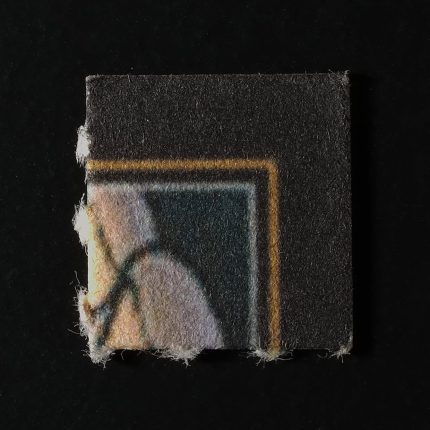
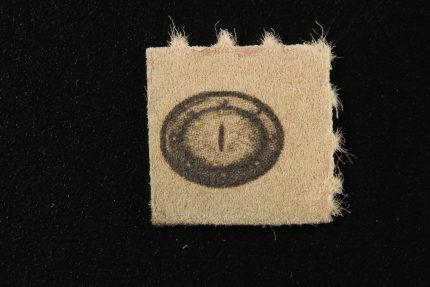
1P-LSD (1-propionyl-LSD) is a synthetic lysergamide and a well-known novel psychoactive substance (NPS) that acts as a structural analogue and prodrug of LSD. When distributed or seized in the illicit or research chemical market, it is frequently found on blotter paper—highly absorbent, perforated sheets divided into individual dosage units, or “tabs”.
This molecule is differentiated from LSD by a propionyl group attached to the nitrogen atom in the indole portion of LSD. The central indole molecule of LSD is the characterising element of the molecule that’s shared with all other tryptamine-based psychedelics (such as DMT or psilocybin).
By now, you’re probably familiar with LSD (lysergic acid diethylamide). It’s the quintessential psychedelic substance alongside the active ingredient in magic mushrooms — psilocybin.
What you may not be familiar with is that there are actually dozens of analogues of LSD that have virtually identical effects.
1P-LSD is one such analogue. The molecular difference is subtle, and recent research even suggests 1P-LSD is a prodrug of LSD.
1P-LSD is legal in Canada and held in a legal grey area in the United States.
Here’s everything you need to know about 1P-LSD. Buy 1P-LSD Germany
What is 1P-LSD?
1P-LSD stands for 1-propionyl-lysergic acid diethylamide. It’s a derivative of LSD — which essentially means it’s a modified version of the classic LSD-25 that Albert Hofmann discovered in 1943.
1P-LSD (Blotters – 100µg per tab) itself is only mildly psychedelic. It has a 67-fold lower binding affinity for the 5-HT1A receptors, a 13-fold lower activity at the 5-HT2A receptors, and a 3.5-fold higher activity at the 5-HT2C receptors than LSD-25 [1]. Buy 1P-LSD USA
The bioavailability of LSD from 1P-LSD is nearly 100%.
1P-LSD: Specs & Technical Details
Active Ingredient
1-propionyl-lysergic acid diethylamide
Level of Risk
Low
Other Names
Legal Acid
Most Common Side Effects
Anxiety & paranoia
Duration of Effects
7 – 11 hours
Legality
Not Scheduled In Most Countries (Legal Grey-Area)
1P-LSD Harm-Reduction & Responsible Use Summary:
🐍 I understand why psychedelics should be treated with respect
⚖️ I’m familiar with the laws for 1P-LSD in my country & state
🍄 I’m familiar with and confident in the dose I’m taking
🧪 I’ve tested a sample of the substance I’m using with a drug testing kit
💊 I’m not mixing any medications or other substances with 1P-LSD
🏔 I’m in a safe & comfortable environment with people I trust
🐺 One of the members of my group is responsible and sober (AKA a trip sitter)
⏳ I have nothing important scheduled for after the trip
🧠 I’m in a sound & healthy state of mind
📚 I’m familiar with the four pillars of responsible psychedelic use — set, setting, sitter, & substance.
⏳ Know the timeline — the effects of 1P-LSD are going to last between 7 and 11 hours.
🙅♀️ Know when to avoid lysergamides — don’t take 1P-LSD if you have underlying heart, neurological, or psychiatric disorders. Buy 1P-LSD Canada
Where Did 1P-LSD Come From?
Since the prohibition of LSD and other psychedelics in 1966, chemists have been seeking to discover new psychedelic “research chemicals” or “designer drugs.”
Researchers like Alexander Shulgin and Dr David E. Nichols (Purdue University) have made significant progress over the years.
This compound entered the market as a “legal LSD alternative” in the mid-2010s without any previous mention in scientific literature. Whoever invented it didn’t publish anything about it and has made no attempt to take credit for their discovery. Buy 1P-LSD Italy
Other LSD Analogues & Derivatives
1B-LSD
1cP-LSD
AL-LAD
ALD-52
ETH-LAD
LSM-775
LSZ
PRO-LAD
What’s The Dose of 1P-LSD?
The dose of 1P-LSD is equivalent to LSD. There have never been any studies on the effective dose of 1P-LSD.
However, with recent findings that 1P-LSD is converted to LSD at a rate of nearly 100%, the psychoactive dose would be identical to that of LSD: Buy 1P-LSD in Czechia
Microdose — 10–20 micrograms
Threshold Dose — 25–40 micrograms
Standard Psychoactive Dose — 80–200 micrograms
Heroic Dose — 200–400 micrograms
What Does 1P-LSD Feel Like?
The effects of 1P-LSD (Blotters – 100µg per tab) are virtually identical to those of LSD. The only difference is that it can take a little bit longer for the effects to kick in.
The experience can vary widely depending on your internal mental state. Likewise, if you feel excited, positive, and curious, 1P-LSD will expand this state of consciousness even further. Buy 1P-LSD Austria
This is exactly why the concepts of set (mindset) and setting (the environment and the people you’re with during the trip) are so important. Going into the experience with a negative attitude, which can include fear, anxiety, or depression, will ultimately lead to a more challenging experience and may even pose psychological harm.
The positive effects of 1P-LSD and other LSD analogues:
A strong sense of awe & wonder
Altered perception of time
Cathartic experiences
Deep-reaching insightful experiences
Ego-dissolution
Euphoria
Hallucinations
Laughter
Mystical experiences
Remembrance of significant life events
Synesthesia
The negative effects of 1P-LSD and other LSD analogues:
Anxiety
Believing people are “out to get you”
Confusion and frustration when performing routine tasks
1P-LSD (Blotters – 100µg per tab)
Paranoia
Reliving past traumatic experiences
Triggering of psychosis or other mental illness. 1P-LSD (Blotters – 100µg per tab)
Buy 1P-LSD Belgium
How Long Does 1P-LSD Last?
1P-LSD lasts roughly the same amount of time as LSD (6 – 10 hours).
This happens quickly but prolongs the amount of time needed for the effects to appear. LSD usually takes less than 30 minutes to kick in, while 1P-LSD can take up to an hour and a half (usually around an hour). This also extends the total duration of the trip. Buy 1P-LSD Spain
The estimated duration of effects for acid is 6 to 10 hours, which means 1P-LSD (Blotters – 100µg per tab) is roughly 7 to 11 hours when you account for this difference.
How to Take 1P-LSD.
Most people hold LSD under the tongue for faster onset of effects because it allows it to enter the bloodstream directly — rather than having to travel through the digestive tract first. Buy 1P-LSD France
However, 1P-LSD (Blotters – 100µg per tab) may actually kick in faster if you swallow the tab instead.
Buy 1P-LSD UK
How Strong is 1P-LSD Compared To Other Psychedelics?
1P-LSD is one of the strongest psychedelics, gram for gram, on Earth.
For example, the dose of 1P-LSD is around 200 micrograms, or 0.2 milligrams. Compare this to psilocybin (the active ingredient in magic mushrooms), which is closer to 10 milligrams. 5-MeO-DMT, the active ingredient in the Bufo alvarius toad (another powerful psychedelic), has a dose of around 8 milligrams, and N,N-DMT, the active ingredient in ayahuasca, is nearly 50 mg. Buy 1P-LSD Poland
1P-LSD vs. LSD-25
. Buy 1P-LSD near me
Compared to LSD-25, 1P-LSD is virtually indistinguishable. There are some reports that 1P-LSD is weaker, others suggesting it’s stronger. The consensus is that the two are identical in terms of their effects and dosage.
1P-LSD vs. AL-LAD
AL-LAD (N6-allyl-6-norlysergic acid diethylamide) is another derivative of LSD-25 with a similar chemical structure as 1P-LSD. Order 1P-LSD online
The dose and overall experience are very similar, but with a few subtle subjective differences. It has a stronger visual aspect, but it’s less introspective. This means it’s going to be a bit easier to handle from a philosophical perspective and less likely to result in issues with ontological shock or existential anxiety — something that can stem from the psychedelic experience. Where to buy 1P-LSD online
1P-LSD vs. LSA
LSA (lysergic acid amide) is the active ingredient in Hawaiian baby Woodrose and morning glory vine. It’s very similar to the effects of LSD derivatives like 1P-LSD but with a few key differences.
For one, LSA is less potent than 1P-LSD. The standard psychoactive dose is around 800 micrograms rather than 200 for 1P-LSD. How to buy 1P-LSD online
Secondly, the LSA experience is less introspective and psychedelic and more lucid and sedative. It often leads people to fall asleep, where they experience complex, vivid, and memorable dreams. Even while awake, the experience feels very dreamlike.
1P-LSD vs. ALD-52
1P-LSD is a homolog of ALD-52, meaning it’s virtually identical except for an extra carbon atom.
Technically speaking, 1P-LSD has a propionyl group attached to the nitrogen atom of the indole ring, whereas ALD-52 has an acetyl group instead.
The effects of these two molecules are essentially identical.
1P-LSD vs. ETH-LAD
ETH-LAD (6-ethyl-6-nor-lysergic acid diethylamide) is the strongest member of the lysergamide psychedelics (there’s some debate to this).
ETH-LAD is considered roughly 20% stronger than 1P-LSD at the same dose. It has stronger visuals and produces a strong sense of connection and introspection.
The downside of this compound is that it also tends to cause some negative physical side effects — such as stomach upset and increased urination. This can lead novice users to panic and experience a more challenging trip. Where to get 1P-LSD online
1P-LSD is a better option for these people and is much less likely to cause a “bad trip.”
1P-LSD vs. PRO-LAD
This compound is slightly weaker than 1P-LSD — but most people won’t be able to tell the difference between these two psychedelics. 1P-LSD (Blotters – 100µg per tab)
The main difference, as pointed out in various trip reports, is that PRO-LAD has a stronger body-high component than 1P-LSD.
1P-LSD vs. LSZ
LSZ (lysergic acid 2,4-dimethylazetidide) is the second strongest lysergamide psychedelic. It’s similar in potency to ETH-LAD but less likely to cause physical side effects.
Compared to 1P-LSD, LSZ produces a stronger “emotional” experience. Many people who take this psychedelic report a strong sense of connection and empathy with others.
Is 1P-LSD Safe?
There have been no clinical studies of 1P-LSD to confirm its safety in humans, and the compound has only been on the market for a couple of years. 1P-LSD for sale
Preliminary research suggests it shares the same effect profile and safety as LSD-25 — a compound with copious amounts of research proving the high safety incidence of this compound.
Responsible Use of Psychedelics
As is the case with all psychedelics, it’s critical that you understand how to stay safe with these compounds before you begin. While there isn’t much of a risk in terms of physical side effects, these substances carry the risk of psychological harm. Buy 1P-LSD online
Risk of Adulteration
One of the benefits of 1P-LSD is its lighter legal restrictions. While this psychedelic isn’t technically legal, it isn’t illegal either (in most places). You can order 1P-LSD from reputable suppliers such as Sigma-Aldrich or other brand-name suppliers, which significantly reduces the risk of adulteration with potentially harmful compounds.
You don’t need to use the black market to buy this stuff. Black market vendors dramatically increase the risk of ordering fake LSD, which often uses NBOMe compounds instead — which are dangerous. 1P-LSD (Blotters – 100µg per tab)
No matter where you buy 1P-LSD, you should test it using a reagent drug testing kit. Here’s how to do it.
How to Test 1P-LSD
You only need a small sample to do this effectively, so you aren’t really wasting any money or doses. Just a small sliver of one of your tabs is enough to perform the test.
Substance tests won’t tell you the quality of a tab, but they will tell you whether certain compounds are in it. The only dangerous compounds that are potent enough to fit on a single blotter paper are LSD and its analogues, NBOMe, or DOMx compounds.
It’s always a good idea to run multiple substance tests for LSD and 1P-LSD.
1. Ehrlich Test
This will show you whether the tab contains indole alkaloids (LSD, 1P-LSD, AL-LAD, or other derivatives) or not.
If you only run one test, this is the one.
Place one drop on a small sliver of the tab and wait for it to change colour. It should turn purple or dark pink. LSD-25 usually turns right away, while 1P-LSD takes longer (up to 3 minutes).
If there’s no colour change, your sample probably doesn’t contain any indole alkaloids and is therefore unsafe to use. 1P-LSD (Blotters – 100µg per tab)
2. Marquis Reagent
The Marquis reagent will identify amphetamines, NBOMe, mescaline, and other substances in your sample.
Follow the chart included in your Marquis test kit to detect other compounds.
3. Hofmann Reagent
It’s always a good idea to run two or more tests with different reagents just to make sure. The Hofmann reagent is used to differentiate certain indole alkaloids.
If the sample turns purple, it’s likely an LSD derivative. If it turns green, it’s 5-MeO-DMT; if yellow, it’s N,N-DMT. 1P-LSD (Blotters – 100µg per tab)
4. Mecke Reagent
The primary role of the Mecke reagent is to determine whether the sample contains opiates. Since most opiates aren’t strong enough at sub-milligram doses, and the experience of these substances is nothing like LSD, it’s very unlikely for there to be any opiates in the sample.
This test is extra, just to be safe. It’s easy to run the Mecke test to make sure the sample doesn’t contain ultra-potent forms of opiates like fentanyl or carfentanil.
Is 1P-LSD Legal?
Technically, 1P-LSD isn’t listed as a controlled substance in either Canada or the United States.
In both countries, you can order this substance from various sources online. In Canada, it’s very unlikely to face any legal trouble for possessing this substance.
In the US, 1P-LSD could be considered illegal by the DEA under the Federal Analogue Act because of its similarity to LSD-25. However, there have yet to be any convictions for the possession of 1P-LSD, and the DEA has never officially mentioned or made any statements about this compound.
Some countries in Europe have added 1P-LSD to their list of prohibited substances, including:
France
Finland
Denmark
Germany
Estonia
Japan
Latvia
Norway
Romania
Sweden
Switzerland
The United Kingdom
LSD is the most famous member of the lysergamides, but there are dozens more, many of which produce similar psychedelic effects.
Some lysergamides (including LSD) are useful for treating headaches, inducing labor, or treating other medical disorders in lower doses.
Here, we’ll take a deep dive into the world of lysergamide psychedelics. We’ll compare their effects, analyze what research is available, and provide details on what makes each of these intriguing chemicals unique. 1P-LSD (Blotters – 100µg per tab)
What Are Lysergamide Psychedelics?
“Lysergamide” specifically refers to compounds that feature a lysergic acid base with an amide group attached.
Lysergamides mimic the effects of serotonin by binding to specific receptors in the brain to produce the characteristic psychedelic effects. The primary target is the 5HT2A serotonin receptor, but lysergamides will also interact with dopamine and norepinephrine to produce changes in mood, mental stimulation, and executive functioning.
Lysergamide Chemical Structure
Lysergamides are polycyclic amides that have both phenethylamine and tryptamine groups integrated within the structure.
The base structure consists of ergoline and an amide group.
They feature a carboxamide group on the eighth carbon and can feature any number of chemical groups on the R1, RN1, RN2, and R6 positions. The effects may vary depending on which functional groups are attached. Some, such as ETH-LAD, appear to have a stronger potency than LSD, while others, such as 2-Bromo-LSD may actually have the opposite effect. 1P-LSD (Blotters – 100µg per tab)
List of Common Lysergamides
There are dozens of lysergamides currently known and likely dozens more that haven’t yet been discovered. Here, we’ll cover the most common members of the class.
1. 1B-LSD
1B-LSD (1-butyryl-lysergic acid diethylamide) is an acetylated version of LSD. There isn’t much research available on this compound, but preliminary studies suggest it to be around 15% of the strength of LSD [5]. Aside from being less potent, the effects are practically indistinguishable from both LSD and 1P-LSD.
1B-LSD was popular in Europe and Canada for a while as a “legal acid,” but new laws have since been imposed to ban this research chemical.
1B-LSD
1B-LSD Specs:
Chemical Name: 1-butyryl-lysergic acid diethylamide
1cP-LSD (1-(cyclopropylmethanoyl)-lysergic acid diethylamide) is an acylated derivative of LSD with similar potency to 1P-LSD [6]. Similarly, 1cP-LSD is believed to be a prodrug for LSD.
Like many research chemicals, 1cP-LSD was created for the sole purpose of avoiding laws that banned known psychedelics. This particular compound first entered the market in Germany and the Netherlands in 2019, shortly after the government banned 1P-LSD.
1cP-LSD
1cP-LSD Specs:
Chemical Name: 1-(cyclopropylmethanoyl)-lysergic acid diethylamide
Duration of Effects: 8–12 Hours
Estimated Threshold Dose: 25 micrograms
3. 1P-ETH-LAD
1P-ETH-LAD (1-Propionyl-6-ethyl-6-nor-lysergic acid diethylamide) is believed to serve as a prodrug for ETH-LAD — one of the stronger members of the lysergamide family. The experience is considered more visual than LSD and has less of an impact on emotion and mood.
This compound was made to avoid regulation but has since been banned in most European countries, Canada, the US, and Australia.
1P-ETH-LAD
1P-ETH-LAD Specs:
Chemical Name: 1-Propionyl-6-ethyl-6-nor-lysergic acid diethylamide
Duration of Effects: 6–12 Hours
Estimated Threshold Dose: 20 micrograms
4. 1P-LSD
1P-LSD (1-propionyl-lysergic acid diethylamide) is a modified version of LSD. It features a propionyl group attached to the nitrogen molecule in the indole portion of LSD. This makes the molecule inactive but is quickly metabolized by the liver into LSD.
Because of the prodrug status of 1P-LSD, the potency tends to vary for each user and has a slower onset time than LSD. For most people, the subjective effects are on-par with LSD.
This was one of the first research chemicals developed to provide “legal LSD” to the market sometime around 2012. Most countries have since banned the substance or enacted analog laws that ban psychoactive isomers of banned substances by default. Currently, 1P-LSD is believed to be legal in Canada.
1P-LSD
1P-LSD Specs:
Chemical Name: 1-propionyl-lysergic acid diethylamide
Duration of Effects: 8–12 Hours
Estimated Threshold Dose: 25 micrograms
5. 1V-LSD
1V-LSD (1-Valeroyl-d-lysergic acid diethylamide) — sometimes referred to as Valerie — is a modified version of 1P-LSD. While there’s virtually no research available on this compound, it’s believed to act as a prodrug for LSD and exhibits near-identical effects.
This compound is the latest invention in a series of chemicals invented in response to various bans in Europe. First, LSD was banned, so analogs like 1P-LSD were invented. Then 1P-LSD was banned, so 1cP-LSD was made. After 1cP-LSD was banned too, 1V-LSD was designed to take its place. This game of cat and mouse continues to this day.
Places with analog laws, like the US, UK, and Austria, consider 1V-LSD explicitly illegal because it’s a psychoactive derivative of LSD. Switzerland recently added the substance to its prohibited substance list, but the compound remains in a legal grey area throughout most of Europe, Canada, and Australia today.
1V-LSD
1V-LSD Specs:
Chemical Name: 1-Valeroyl-d-lysergic acid diethylamide
Duration of Effects: 8–12 Hours
Estimated Threshold Dose: 25 micrograms
6. 2-Bromo-LSD
2-Bromo-LSD (2-Bromolysergic acid diethylamide) — sometimes called BOL-148 — is believed to block the effects of LSD. It binds to the same receptors but does not exert any psychedelic activity.
This compound was one of many ergotamine derivatives invented by Albert Hofmann and his team in the late 1950s. The goal of creating these compounds was to find a new treatment for migraine headaches. This eventually led to the accidental discovery of the lysergamide psychedelics.
2-Bromo-LSD has been shown to offer some support for cluster headache attacks, and due to the lack of psychoactivity compared to LSD, it may prove useful for this application in the near future. However, more research is needed to confirm the safety and efficacy of this compound for this application.
It’s also possible this compound could be used to dull the effects of LSD [7].
2-Bromo-LSD
2-Bromo-LSD Specs:
Chemical Name: 2-Bromolysergic acid diethylamide
Duration of Effects: Unknown
Estimated Threshold Dose: Not Active
7. AL-LAD
AL-LAD (N6-allyl-6-norlysergic acid diethylamide) is one of the more common lysergamide derivatives. Compared to LSD, AL-LAD is favored for its slightly milder but more visual effects. It also tends to be less introspective and more “recreational” than LSD — which can often lead users to feel deeply introspective and philosophical.
This compound isn’t new. It’s been around since the 70s and has been formally studied several times already. Dr. David E. Nichols and his team at Purdue University have focused on this chemical in at least one study, and the compound earned a mention in Alexander Shulgin’s book, TIHKAL.
AL-LAD
AL-LAD Specs:
Chemical Name: 6-allyl-6-norlysergic acid diethylamide
Duration of Effects: 7–11 Hours
Estimated Threshold Dose: 40 micrograms
8. ALD-52
ALD-52 (1-acetyl-N,N-diethyllysergamide) is a homolog of 1P-LSD — the two are identical aside from 1P-LSD containing one additional carbon atom.
Unsurprisingly, the effects of ALD-52 and 1P-LSD are virtually identical. ALD-52 serves as a prodrug for LSD, only becoming active after it’s processed by the liver. This can delay the onset of effects by as much as one additional hour compared to LSD — though most people start to experience the effects within about 60 minutes of taking it.
This lysergamide was first synthesized in Hofmann’s lab in the 1950s. It was believed to be the active ingredient in a particularly strong batch of LSD called Orange Sunshine (produced by Nick Sand), but this was later debunked by Sand himself. The effects of ALD-52 are considered equivalent, if not slightly weaker than LSD.
ALD-52
ALD-52 Specs:
Chemical Name: 1-acetyl-N,N-diethyl-lysergamide
Duration of Effects: 7-11 Hours
Estimated Threshold Dose: 25 micrograms
9. BU-LAD
BU-LAD (6-butyl-6-nor-lysergic acid diethylamide) was one of several lysergamide compounds invented by Alexander Shulgin. It was published in his book, TiHKAL, but hasn’t received much attention since this because of its weak effect profile. Shulgin reportedly consumed a dose of 500 micrograms of BU-LAD and reported only mild psychoactive effects.
BU-LAD
BU-LAD Specs:
Chemical Name: 6-butyl-6-nor-lysergic acid diethylamide
Duration of Effects: Unknown
Estimated Threshold Dose: Unknown
10. ETH-LAD
ETH-LAD (6-ethyl-6-nor-lysergic acid diethylamide) is one of the most popular lysergamides aside from LSD. Its popularity is likely the result of its slightly stronger effect profile. The threshold dose of this compound is only 20 micrograms. For comparison, the threshold of LSD is closer to 30 micrograms.
Despite its popularity, there’s limited information regarding safety or qualitative effect differences.
The drug creator, Alexander Shulgin, claims ETH-LAD produces strong visual effects but is less likely to produce unwanted physical sensations compared to tryptamine psychedelics.
ETH-LAD
ETH-LAD Specs:
Chemical Name: 6-ethyl-6-nor-lysergic acid diethylamide
Duration of Effects: 8–12 Hours
Estimated Threshold Dose: 15 micrograms
11. LSA
LSA (d-lysergic acid amide) is a naturally-occurring lysergamide found in the ergot fungus as well as the seeds of morning glory and Hawaiian baby woodrose (both from the Convulaceae family).
LSA was discovered in 1932 and classified under the name “ergine” [8]. Other sources use the term LAE-111.
Compared to other lysergamides, LSA is much less potent and has a distinct sedative action. This combination gives LSA a distinct oneriogenic effect that’s absent from most of the other compounds in this category.
The conventional dose of LSA is around 500 micrograms to 1 gram, making it less than 10% as potent as LSD. Most LSA is derived from either morning glory or Hawaiian baby woodrose seeds in the form of tinctures, but isolated LSA is also available.
The effects of LSA are described as lucid and dreamy but come with some negative qualities as well. The body load from LSA can be uncomfortable and, in some cases, extreme, producing feelings of nausea, stomach cramping, tingling, and dizziness. These effects can be quite uncomfortable.
LSA
LSA Specs:
Chemical Name: (6aR,9R)-7-methyl-6,6a,8,9-tetrahydro-4H-indolo[4,3-fg]quinoline-9-carboxamide
Duration of Effects: 6–12 Hours
Estimated Threshold Dose: 300 micrograms
12. LSD
LSD (lysergic acid diethylamide) — AKA Lucy, LAD, and Acid — is hands down the most popular member of the lysergamide family of psychedelics. While LSD isn’t necessarily the strongest, it was the first to be explored scientifically. It provides long-lasting and profound effects while lacking any major safety risks.
Part of the reason this compound became so popular is because of advocates like Timothy Leary, Leo Zeff, Richard Alpert, and others throughout the 1960s and 70s. LSD was supplied to Leary, Alpert, and the rest of their team by Sandoz Pharmaceuticals as part of the Harvard Psilocybin Project. At the time, LSD was perfectly legal, and Sandoz wanted researchers to conduct research on their new compound in order to find a potential use for it.
After LSD became a symbol for the 60s counterculture and hippie movement, then-president Ronald Regan banned the substance and declared war on drugs. This, of course, brought all research on LSD and other psychedelics to a halt for several decades.
The US government had a secret project called MK-ULTRA in the 60s, 70s, and 80s as well, which attempted to use LSD for more nefarious purposes like mind control and truth serums.
LSZ (lysergic acid 2,4-dimethylazetidide) was first discovered by David E. Nichols at Purdue University in the 1980s. The effects are virtually identical to LSD but with slightly higher potency and longer-lasting effects. The come-up is also slower, taking up to 1.5 hours to begin feeling effects.
Like many lysergamides, there isn’t much research on this compound, but so far, there’s no indication this compound poses any significant health risks.
Anecdotal reports suggest this compound has a higher emphasis on the emotional experiences of lysergamide psychedelics, less visual intensity, and a somewhat sedative nature in higher doses. Many people claim this to be the best psychedelic for use in the evenings because it’s easier to fall asleep afterward.
LSZ
LSZ Specs:
Chemical Name: Lysergic acid 2,4-dimethylazetidide
PARGY-LAD (6-propynyl-6-nor-lysergic acid diethylamide) is a homolog of LSD with a similar effect profile. The potency of this compound is reportedly much lower than LSD, however — with the threshold dose around 160 micrograms. According to Alexander Shulgin, the psychoactive dose for this compound is somewhere in the ballpark of 500 micrograms — making this compound roughly 40% as strong as LSD.
This compound was included in Shulgin’s TiHKAL, but not much has been published in the literature since then. This is likely due to the lower potency combined with the challenges of manufacturing. This molecule is very similar to LSD and requires virtually the same synthesis process. It makes more sense to create the stronger LSD than the weaker PARGY-LAD.
PARGY-LAD
PARGY-LAD Specs:
Chemical Name: 6-propynyl-6-nor-lysergic acid diethylamide
PRO-LAD (6-propyl-6-nor-lysergic acid diethylamide) is another creation of the Purdue University team led by David E. Nichols in the 1980s. This compound shares the same structure as LSD, with the addition of just two extra carbons. This changes the potency and effect profile slightly — though most people probably wouldn’t be able to tell the difference.
Some users suggest PRO-LAD has a stronger body load than LSD — producing sensations like tingling in the fingers and toes, a sensation that one is either floating or sinking into the ground, and increased awareness of other bodily sensations.
PRO-LAD
PRO-LAD Specs:
Chemical Name: 6-propyl-6-nor-lysergic acid diethylamide
The list doesn’t end here. The compounds listed above only cover the lysergamides that have been tested in some way for effects, potency, and safety. There are likely hundreds of undiscovered and untested lysergamides. More research is needed to explore these compounds in more detail. It’s an exciting time to be a researcher at the moment. Any of the below compounds could potentially provide new, distinct effect profiles.
Amesergide
CYP-LAD
DAL
DAM-57
ECPLA
EIPLA
ETFELA
IP-LAD
iso-LSD
LAcB
LAE-32
LAiP
LAtB
LPD-824
LSB
LSD-Pip
LSH
LSM-775
LSP
LY-215840
Methergine
Methysergide
MiPLA
MLD-41
MPLA
Ergot Alkaloids
LSD and the rest of the lysergamide family are based on the structure of ergot alkaloids such as ergoline.
This group of naturally-occurring alkaloids is produced in several species of Claviceps fungi — including Claviceps purpurea, C. fusiformis, C. paspali, C.africana, C. lutea, and others. These fungi infect grains like wheat, rye, barley, and oats.
Each of these fungi produces large quantities of alkaloids such as ergometrine, ergotamine, and about a dozen others. The most common is ergotamine — accounting for roughly 2% of the dried weight of Claviceps spp.
Many of the ergot alkaloids are psychoactive but also cause an often fatal condition called ergotism (AKA “St. Anthony’s Fire”).
This condition causes severe burning sensations in the limbs, muscle spasms, fevers, hallucinations and delusions, paralysis, seizures, and death. There are reports of people entering a permanent daze or mania after consuming grains infected by the ergot fungus. Death often results from severe damage to the vascular system in which blood is no longer able to flow — leading to severe infection.
Lower doses of ergot alkaloids are sometimes used for treating vascular disorders, stimulating uterine contractions, and treating migraine or cluster headaches.
Several ergot alkaloids were put under the lens of the German pharmaceutical company Sandoz in the early 1900s, which eventually led to the creation of LSD in 1938.
1. Ergoline
Ergoline is the most basic of the ergot alkaloids and serves as the skeleton for virtually all other ergot alkaloids, as well as the synthetic and semi-synthetic class of the lysergamide psychedelics.
Ergoline
Ergoline itself is thought to have low psychoactive effects on its own. The addition of an amide group significantly enhances its ability to bind to the serotonin and dopamine receptors.
2. Ergometrine
Ergometrine was first discovered in 1932. It’s a naturally-occurring alkaloid from the ergot fungus. Albert Hofmann used this compound and several others as the starting point for synthesizing more advanced lysergamides like LSD and ALD-52.
3. Ergotamine
Ergotamine is a naturally occurring alkaloid from the ergot fungus, first discovered in 1918 by researchers at the Sandoz pharmaceutical company in Germany. It’s sometimes used as a treatment for migraine and cluster headache attacks in low doses. It’s sold under brand names like Cafergot (ergotamine and caffeine) and Ergomar.
Ergotamine
This compound is considered a controlled substance because it can be used as a precursor for making LSD.
4. Ergine
Ergine is the common name for LSA (lysergic acid amide), which was outlined earlier as one of the more commonly used lysergamides. This is probably the only naturally occurring lysergamide used for its psychedelic effects. Most of the others cause severe side effects at high doses.
Ergine (LSA)
Ergine produces side effects, too — most commonly nausea, stomach cramps, dizziness, and sedation. However, unlike other members of the ergoline alkaloid class, ergine doesn’t appear to produce any lasting changes, nor does it have a strong effect on the vascular system.
Most people take ergine as morning glory or Hawaiian baby woodrose seed tinctures or extracts.
Are Lysergamides Safe?
Most lysergamides closely related to LSD are considered “likely very safe,” but there isn’t enough research available to confirm this. Only a handful of LSD derivatives have been tested for safety, but so far, none appear to pose any increased risk.
Most of the naturally occurring ergot alkaloids from Claviceps spp. are dangerous and should not be used for psychedelic purposes.
The only lysergamide with any significant research behind it in terms of safety is LSD — and the results have been very impressive.
Over the past 60 years of research and use of LSD among the public, there’s no evidence to suggest it poses any significant threat to one’s physical health when used responsibly and within the standard dosage range of 50–400 micrograms. 1P-LSD (Blotters – 100µg per tab)
A study from 1977 proposed the lethal dose was around 100 mg [10], but many researchers believe the number to be much higher than this.
The biggest risk of using LSD and related lysergamides comes from accidental injury and adulteration with other, more dangerous compounds — namely NBOMe.
NBOMe substances (especially 25I-NBOMe) are among the few compounds that offer potency comparable to lysergamides. Most other substances aren’t strong enough to provide a fatal hit in sub-milligram doses. The blotter paper lysergamides are doses that can only hold around 200 micrograms (0.2 mg) of the active ingredient. NBOMe substances have been fatal with as little as one tab but generally require two or more hits to result in death.
Are Lysergamides Legal?
No, lysergamides have been banned globally since the 1960s. Initially, just LSD was banned, but over the years other LSD derivatives have also been added to this list.
For several decades, clandestine drug manufacturers and regulators have been playing a game of cat and mouse. A new compound is created, such as ETH-LAD, which side-steps the regulations around LSD. Then a new law is imposed to ban ETH-LAD, so 1P-ETH-LAD is created instead.
Today, most countries have some form of analogue act, which makes all psychoactive isomers of known psychedelics illegal by default. This means any new lysergamide created is already illegal, even if it isn’t specifically mentioned. 1P-LSD (Blotters – 100µg per tab)
Some countries, such as Canada, don’t have analogue laws, so certain lysergamides that aren’t on the list of controlled substances may still be legal. For example, many experts believe 1P-LSD, 1B-LSD, and 1V-LSD are all legal in Canada.
What’s The Strongest Lysergamide Psychedelic?
Anecdotal reports suggest ETH-LAD is the strongest member of the lysergamide class, but not by much. The threshold dose of this compound is somewhere around 20 micrograms, compared to 25 for LSZ and 25–30 for LSD. Most people who take a tab of ETH-LAD won’t be able to tell the difference from a tab of LSD.
It’s difficult to assess the potency of these compounds through anecdotes because it’s impossible to know the exact dosage used. A blotter tab can hold anywhere from 25–200 micrograms of active ingredient depending on how it was made and how long it’s been in storage.
One way to assess the potency of psychoactive compounds is to compare the binding capacity on target receptors like the 5HT2A receptor. However, this doesn’t provide the whole picture either. Just because something binds more strongly to a receptor doesn’t mean the effects it produces are stronger.
All this aside, based on the information currently available, here’s an estimated ranking of lysergamides by potency (strongest to weakest):
ETH-LAD/1P-ETH-LAD
LSZ
LSD/1P-LSD
ALD-52
1V-LSD
AL-LAD
PRO-LAD
PARGY-LAD
LSA
BU-LAD
2-Bromo-LSDThe Czech Republic
Lysergamide Psychedelics
LSD isn’t unique. There are dozens of related compounds that provide similar effects. 1P-LSD (Blotters – 100µg per tab)
Are There Any Natural Lysergamides?
Yes, LSA is a naturally occurring lysergamide found in the ergot fungus, as well as morning glory and Hawaiian baby Woodrose seeds. The common name for this compound is ergine.
There are other psychoactive ergot alkaloids that are classified as lysergamides, but most of them are toxic when used in psychoactive doses.
The vast majority of lysergamides used for their psychoactive effect are either synthetic or semi-synthetic.
Summary: What Are Lysergamides?
Lysergamides are a large group of psychedelic compounds closely related to LSD.
These compounds interact with both the serotonin and dopamine receptors in the brain to produce the characteristic psychoactive effects.
Lysergamides are exceptionally potent — most are active in doses well below a single milligram. They all produce similar effects but may differ subtly depending on how strongly they bind to various receptors in the brain. Some are more tactile and have a stronger body load; others are more cerebral and introspective, and some are lucid and sedating. 1P-LSD (Blotters – 100µg per tab)
Final Thoughts: What’s The Future of 1P-LSD?
This psychoactive substance is virtually identical in its effects to LSD. It’s a prodrug of LSD-25, which means it’s converted into LSD by the liver, which then goes on to produce psychoactive effects.
Because LSD is banned, and 1P-LSD isn’t (in most places), it’s used the exact same way as LSD.
As more countries find out about this analogue, they’ll likely move to place it under the same regulations as LSD.
More liberal countries, like Canada, are unlikely to make this change as laws are already moving towards legalising LSD anyway. This compound is not dangerous, and there’s no indication it will pose any additional risk to society. We’ll likely see more of this compound in the near future until LSD-25 becomes legal.
LSD-25 is easier to produce and has a faster onset time than 1P-LSD. When you consider that the two have the same experience, LSD is the slightly better option.